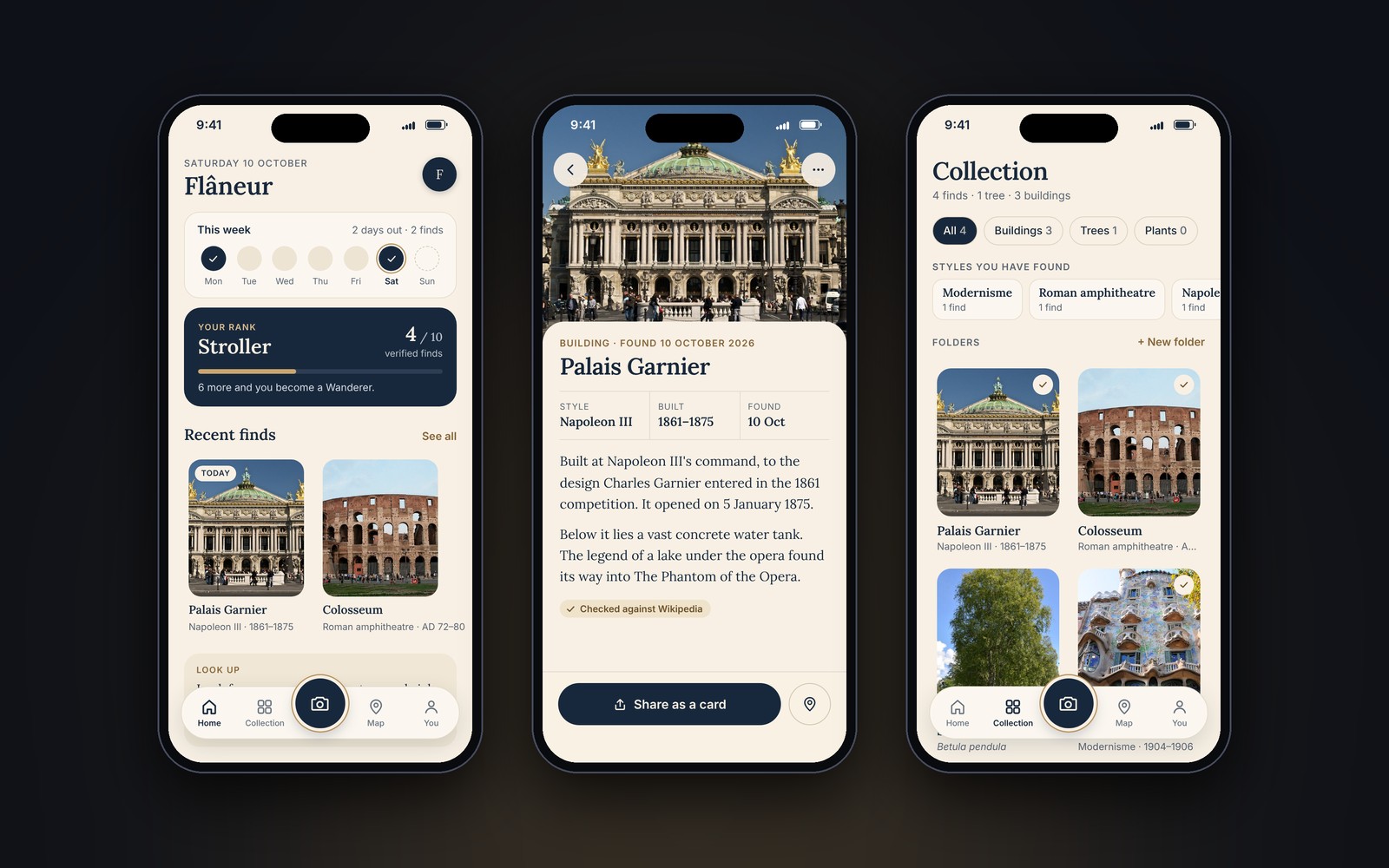
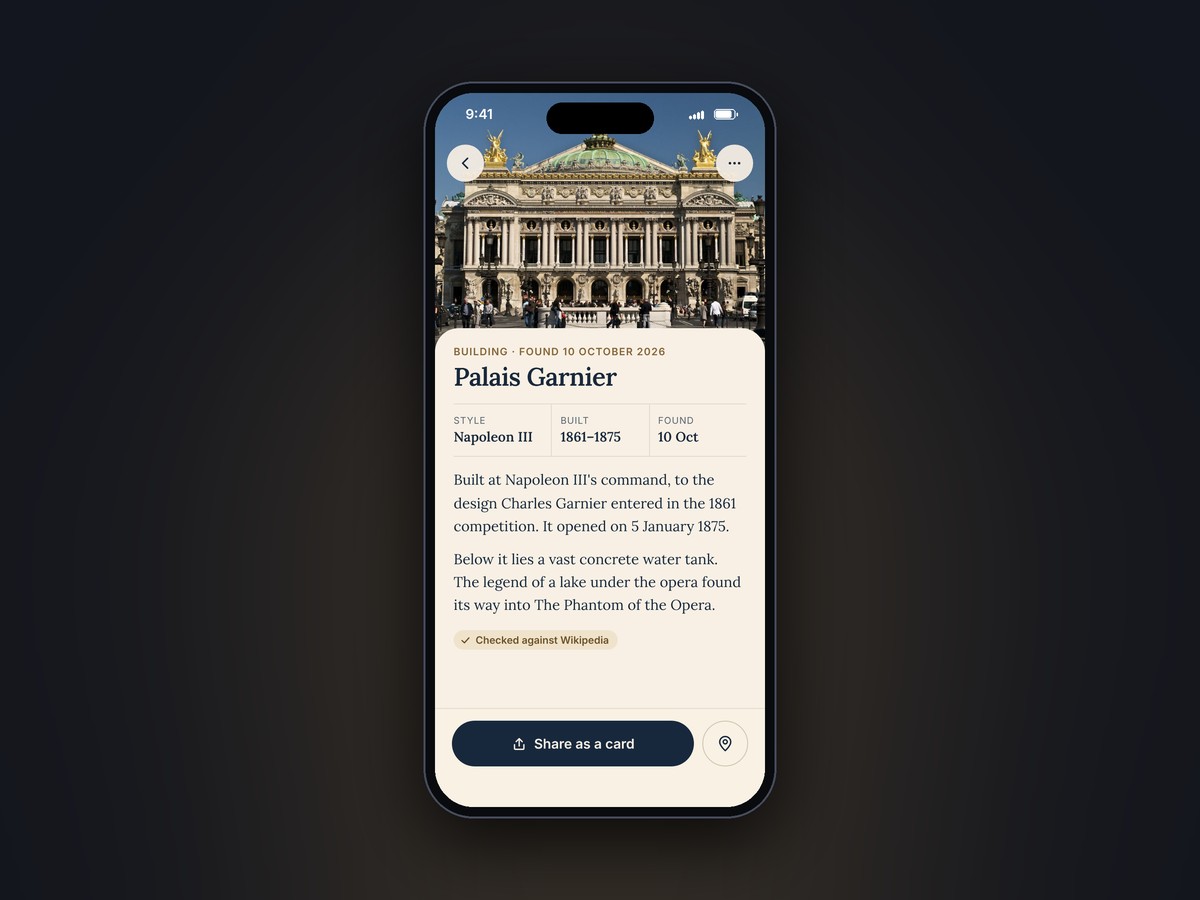
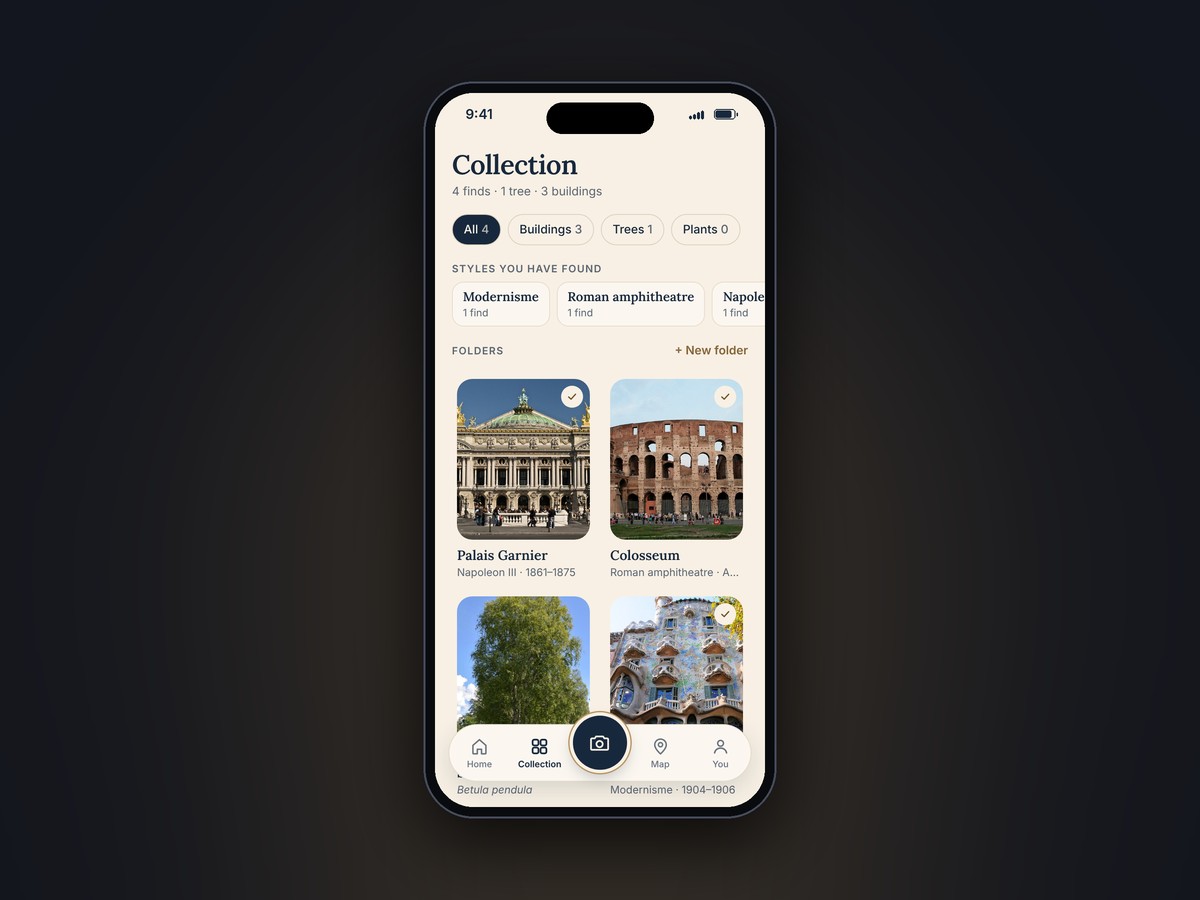
Point your phone at a building, a tree or a flower, and read its true story, with the source it came from.
Sector
City guide
Client
Our own product
Year
MMXXVI
What we did
Web app · iPhone and Android apps on the way · AI with sources
4
Sources a story is checked against: Wikipedia, Wikidata and OpenStreetMap for buildings, Pl@ntNet for plants
0
Accounts needed. It works without signing up, and keeps working offline
~130
Words in a story: short enough to read standing in front of the building
01
The problem
City guides tell you about the famous sights. The building on your own street, or the tree in the park, has a story too, but nobody writes it down for you.
And when an AI writes it, it can easily tell a convincing story about the wrong place.
02
The rules we set
Every story is checked against a real record for the place where you stand. If there is no record, the app says so and describes only what it can see, instead of inventing a history.
No account, no ads, no feed. The photo you scan is used only to name the find. If you choose to sign in, your collection is backed up in Zurich.
A find · The storyYour collection
03
What we built: a guide you collect
A web app that runs in any phone browser and keeps working offline, now being prepared for the App Store and Google Play.
Take a photo and you get the name, the style and date, and a short story with its source. Every find joins your collection and pins itself to your own map of the city. Verified finds move you up five ranks, from Stroller to Flâneur.
Why we built it
Flâneur is the studio’s own product. We use it to test what we sell: AI that names its sources, apps that keep working offline, and privacy without a cookie banner.
Status: live on the web at flaneur-app.com; iPhone and Android versions on the way.